2022
Article
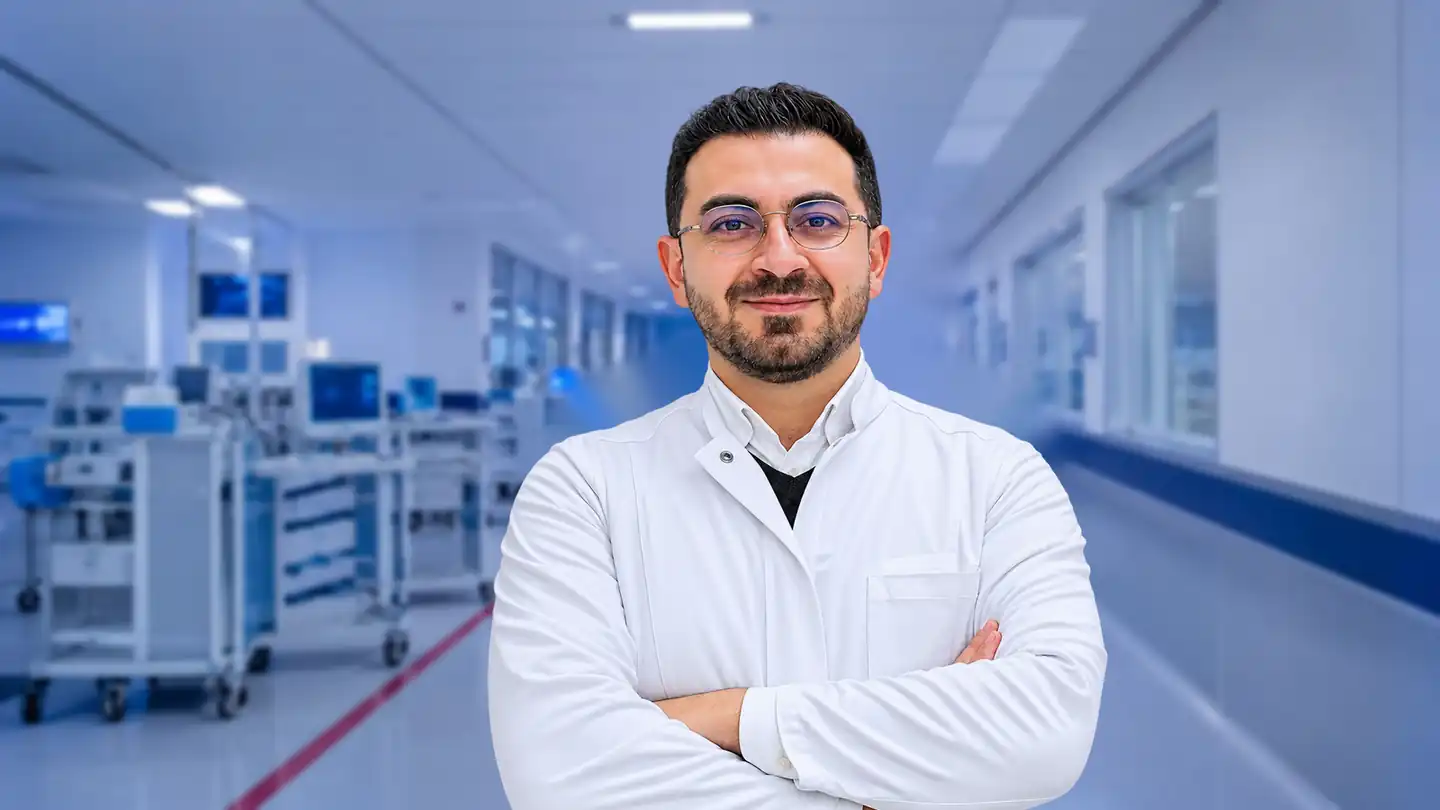
 Dr. Tural Pashayev
Hematologist
Book now
Dr. Tural Pashayev
HematologistBone marrow transplantation
Consultation hours
Mon – Fri09:00–15:00
Saturday09:00–12:00
HospitalLiv Bona Dea Hospital
Bone marrow transplantationAnemiasBlood clotting disordersLeukemiasLymphomasMultiple myelomaPlatelet disorders
About the doctor
Dr. Tural Pashayev is a specialist in diseases of the blood and blood-forming organs. He completed his hematology specialty training at Ege University in Türkiye and has practiced in Baku since 2023. Alongside treating hematological diseases, he works in bone marrow transplantation.
He is a member of leading hematology societies in Azerbaijan and Europe, and an author of scientific articles and book chapters.
Career
2007–2013
Azerbaijan Medical University
Medical degree
2014–2019
Hacettepe University
Internal medicine, Türkiye
2019–2022
Ege University
Hematology, Türkiye
From 2019
İzmir Kent Hospital
Clinical practice, Türkiye
2023 – present
Liv Bona Dea Hospital
Hematologist, Baku
12+
years of clinical experience
7+
years specializing in hematology
5+
international and local scientific publications
4
professional hematology societies
Areas of treatment
Bone marrow transplantation
Preparation for transplantation, the procedure itself and long-term follow-up afterwards. One of the most important treatments for hematological diseases.
Learn more →Anemias
Diagnosis and treatment of iron, B12 and folate deficiency, hemolytic and other types of anemia.
Clotting disorders
Assessment of thrombosis tendency, bleeding tendency and conditions such as hemophilia.
Leukemias
Diagnosis of acute and chronic leukemias, treatment planning and long-term follow-up.
Lymphomas
Diagnosis, treatment and post-treatment follow-up of Hodgkin and non-Hodgkin lymphomas.
Multiple myeloma
Detection, treatment and regular monitoring of plasma cell disorders.
Platelet disorders
Investigating the causes of low or high platelet counts.
Research and memberships
Dr. Tural Pashayev combines clinical practice with research. During his years at Hacettepe and Ege universities in Türkiye he took part in multicenter clinical studies whose results were published in international and Turkish medical journals.
His research focuses mainly on acute leukemias, chronic myeloid leukemia and transplant-related infections. He has also authored chapters in hematology textbooks.
As a member of hematology societies in Azerbaijan, Türkiye and Europe, he follows developments in the field and applies them in his daily practice.
Professional memberships
Azerbaijan Hematology Specialists Association
Azerbaijan
Turkish Society of Hematology
Türkiye
European Hematology Association (EHA)
Europe
European Society for Blood and Marrow Transplantation (EBMT)
Europe
Selected publications
All publications (ORCID) →
2021
Book chapter
Kronik Miyeloid Lösemi ve Kronik Miyeloproliferatif Hastalıklar
Türkiye Klinikleri, Hematoloji – Özel Konular Chapter: stopping CML treatment · Chapter author
2020
Article
Ege Üniversitesi hastanesi veri tabanında kayıtlı erişkin akut lösemi olgularının epidemiyolojik ve genel sağkalım özelliklerinin retrospektif olarak değerlendirilmesi
Ege Tıp Dergisi, 59 (supplement) Topic: epidemiology and survival of acute leukemia in adults · Co-author
2022
Article
Bacterial Bloodstream Infection in Renal Transplant Recipients: 15 Years of Experience in a University Hospital
Erciyes Medical Journal, 44(5): 466–472 Topic: bloodstream infections after transplantation · Co-author
2021
Article
Comparison of teicoplanin versus vancomycin in combination with piperacillin-tazobactam or meropenem for the risk of acute kidney injury
European Journal of Clinical Microbiology & Infectious Diseases, 40(9): 1953–1961 Topic: antibiotic combinations and kidney injury · Co-authorWhen should you see a hematologist?
The signs below can be early indicators of blood disorders. If they persist, it is advisable to see a doctor.
Persistent fatigue
Weakness that does not go away with rest, dizziness, shortness of breath on light exertion.
Paleness
Pale skin, lips and inner eyelids.
Easy bleeding
Unexplained bruising, frequent nose or gum bleeding, prolonged menstrual bleeding.
Recurrent infections
Getting sick often, prolonged fever with no clear cause.
Swollen lymph nodes
Persistent, usually painless lumps in the neck, armpit or groin.
Night sweats and weight loss
Heavy sweating at night, losing weight without dieting.
Bone pain
Unexplained, persistent pain, especially in the back, ribs and long bones.
Abnormal blood tests
Hemoglobin, white blood cell or platelet counts outside the normal range.
In an emergency such as heavy bleeding, fainting or severe shortness of breath, call 103 immediately.
How an appointment works
1
Booking
Contact us via WhatsApp or phone and a convenient day and time will be arranged.
2
First consultation
Your symptoms, medical history and previous test results are reviewed in detail.
3
Further tests
If needed, additional blood tests and other examinations are ordered for an accurate diagnosis.
4
Treatment plan
Based on the results, a personal treatment and follow-up plan is prepared and the next steps are explained.
Please bring with you
- Blood test results from the last 3–6 months
- Previous medical reports and discharge summaries
- A list of the medicines you take
- Imaging and biopsy results, if any
Frequently asked questions
Short answers to the questions patients ask most often. Can’t find your answer? Write to us.
Ask a question →What does a hematologist treat?
A hematologist treats diseases of the blood and blood-forming organs (bone marrow, lymph nodes, spleen). These include anemias, blood clotting disorders, leukemias, lymphomas and multiple myeloma.
My hemoglobin is low. Should I see a hematologist?
Low hemoglobin means anemia, and its cause should be investigated. It may be simple iron deficiency or a more serious condition. Seeing a hematologist is especially advisable if other values are also abnormal or if hemoglobin does not rise despite treatment.
Is anemia always caused by iron deficiency?
No. Iron deficiency is the most common cause, but anemia can also result from B12 or folate deficiency, chronic diseases, breakdown of red blood cells (hemolysis) or bone marrow disorders. That is why taking iron supplements before the cause is known is not recommended.
What should I bring to my first appointment?
Blood tests from the last 3–6 months, previous medical reports and discharge summaries, a list of the medicines you take, and any imaging (ultrasound, CT, MRI) and biopsy results.
Is a bone marrow transplant an operation?
No, for the patient it is not surgery. The stem cells are given intravenously, much like a blood transfusion. The most important parts of the process are the conditioning treatment beforehand and the recovery period afterwards.
Who can be a donor?
The best donor is usually a fully matched brother or sister. If there is no matched relative, an unrelated donor is searched for in donor registries, and in some cases a half-matched family member (haploidentical) can donate. For certain diseases the patient’s own cells are used (autologous transplant).
Can I send my test results before the appointment?
Yes, you can send your test results and medical reports on WhatsApp. This helps plan the appointment and any additional tests. An exact diagnosis and treatment plan are made only after a medical examination.
Contact
To book an appointment or ask a question, call or write on WhatsApp.
Address
Consultation hours
Mon – Fri: 09:00–15:00Sat: 09:00–12:00